
Outcomes-based reporting for referral workflows means tracking closed-loop confirmations, services rendered, enrollment, or a documented decline, and producing funder-ready, disaggregated reports tied to those confirmations. Start this quarter by mapping one referral pathway end to end and picking a single metric to report on. Standards like 360X and the Gravity Project already define the status messages you need, and platforms such as EquiLoop build on them.
TL;DR:
- Tracking confirmed outcomes, such as services rendered or enrollment, is essential, while statuses like no-shows do not close a referral nor measure success.
- The standard vocabulary for referral statuses, including services rendered and declines, must be used consistently across partners to produce compliant, funder-ready reports.
- Key metrics include closed-loop rate, median time-to-service, and referral category breakdowns, with longer follow-up windows improving outcome capture, especially in housing referrals.
- Data sharing requires formal agreements, documenting consent, source provenance, and minimum fields, ideally using FHIR standards for interoperability.
- Successful implementation depends on mapping referral pathways, agreeing on shared definitions, piloting with one partner, and routine reconciliation to ensure data quality.
Table of Contents
- What outcomes-based reporting means for referral and care-coordination workflows
- Key metrics funders expect and how to prioritize them
- Data, interoperability, and documentation requirements
- How to build a funder-ready outcomes report (structure and sample fields)
- Step-by-step implementation checklist for closing the loop in rural and community settings
- Common pitfalls, verification, and quality checks
- Benefits and impact of outcomes-based reporting for healthcare providers and patients
- Examples of successful outcomes-based reporting implementations or case studies
- Challenges and limitations specific to outcomes-based reporting in healthcare
- Regulatory and compliance considerations related to outcomes-based reporting
- Tools and technologies commonly used to support outcomes-based reporting
- Best practices for maintaining data privacy and security in outcomes-based reporting
- How EquiLoop and Workforce Development Academy support outcomes-based reporting
- FAQ
- Sources
What outcomes-based reporting means for referral and care-coordination workflows
A referral closes the loop when you receive confirmation that something happened after the handoff: services rendered, enrollment completed, or a decline with a documented reason. A referral that only produces a resource list, with no confirmation of what followed, stays open and unmeasured. That distinction matters because a 2021 systematic review found that programs using direct referral assistance, rather than relying on indirect referrals such as handing someone a list, more often produced improved community health outcomes across the 35 studies it analyzed.
Not every status update counts as closure. A no-show does not close a referral; it signals that follow-up is still needed. Technical guidance from 360X and the Gravity Project defines the standard status vocabulary, including services rendered, no-show, enrollment, and discontinued, and shows how these map to HL7 and FHIR messages. Using that shared vocabulary with your partners, rather than inventing your own labels, is what lets a report hold up under funder review.
Key metrics funders expect and how to prioritize them
Funders increasingly want proof of follow-through, not just volume. A handful of indicators cover most reporting requests:
- Closed-loop rate: the share of referrals with a confirmed outcome (rendered, enrolled, or declined with reason) out of all referrals sent.
- Median time-to-service: the number of days between referral and the first confirmed service.
- Enrollment and engagement rate: the share of referred individuals who actually start the service.
- Services rendered by category: housing, food, transportation, behavioral health, and so on, broken out separately.
Process metrics support interpretation without standing in for outcomes themselves: outreach attempts per referral, contact success rate, and the breakdown of decline reasons. These numbers explain why a closure rate looks the way it does, which matters when a funder asks why housing referrals close more slowly than food referrals.
Pilot evidence from FHIR-enabled programs shows that referral open times and closure rates vary by service domain, with housing referrals often closing more slowly due to supply constraints. That pattern, documented in FHIR pilot findings, is a useful benchmark when you explain gaps in your own report rather than treat them as program failure.
For rural programs with limited staff, start narrow. Pick closure rate and time-to-service first. Both are calculable from basic status tracking, both answer the question funders ask most often, and both give you a baseline before you add enrollment breakdowns or category-level detail.
Data, interoperability, and documentation requirements
Trustworthy outcomes reporting rests on agreements and fields, not just software. Before you collect a single data point, settle who shares what, how often, and under what consent terms.
- Data-sharing agreements: formal agreements between your organization and each referral partner, specifying what status data gets shared and how often.
- Minimum fields: referral date, partner organization, service category, status (using a shared vocabulary), status date, and outcome reason when declined.
- Consent documentation: a record that the individual agreed to have their referral status shared between organizations.
- Provenance notes: where each data point came from (partner log, EHR extract, phone follow-up) and when it was recorded.
Aim for FHIR-based exchange where your systems support it, using 360X and Gravity Project status semantics as your reference point. Where that is not feasible, a shared spreadsheet or hub pattern with documented provenance is a workable fallback, as long as every entry notes its source and date.
HRSA’s UDS+ reporting guidance points toward structured, de-identified patient-level data using HL7 FHIR for certain reporting pipelines. Building your internal records to that structure now, even before a funder requires it, saves a rebuild later. For record retention and documentation standards that hold up to outside review, guidance on maintaining legal records offers a useful framework for provenance and retention practices.
How to build a funder-ready outcomes report (structure and sample fields)
A report that satisfies a funder has a predictable shape. Four sections cover most requirements:
- Executive summary: the headline numbers and what they mean in one paragraph, written for someone outside the program.
- Outcomes dashboard: the core metrics for the reporting period, disaggregated by referral category.
- Cohort and method notes: how the cohort was defined, what counts as closure, and the follow-up window used.
- Provenance and limitations: where the data came from and what gaps or exceptions exist.
A simple dashboard table makes the numbers legible at a glance:
Disaggregate by category at minimum, and by site or partner if your funder asks for it. Note your follow-up window explicitly (30, 60, or 90 days) because a shorter window will understate closure and a longer one will show more complete results. One evaluation documented that lengthening a follow-up window from two weeks to one to two months improved documented linkage to care in a project setting, which is a reminder that the window itself shapes the number you report, as described in follow-up timing research.
Always include a short limitations section: what you could not verify, where data came from partner logs versus your own system, and what you are doing to close those gaps. Funders tend to trust a report more when it names its own blind spots than one that claims completeness it cannot support.
Step-by-step implementation checklist for closing the loop in rural and community settings
Closing the loop is a workflow project before it is a reporting project. A practical sequence for under-resourced teams:
- Map one referral pathway from intake to confirmed outcome, naming every partner touchpoint.
- Agree on status definitions with each partner, using a shared vocabulary like the one in 360X guidance.
- Set a follow-up window, generally one to two months, and document why you chose it.
- Put a data-sharing agreement in writing, covering what gets shared, how often, and under what consent.
- Pilot with one partner and one metric before expanding to the full network.
- Run weekly reconciliation between your records and partner logs during the pilot.
- Train staff and partners on the status definitions and reporting cadence; a structured LMS, such as our Workforce Development Academy, can reduce the burden of repeating this training as staff turn over.
- Scale to additional partners and metrics once the pilot shows a stable closure rate.
Pro Tip: Run your pilot on the referral category with the highest volume, not the one that seems easiest, so your first report actually reflects program scale.
Related guidance on mapping workflows step by step appears in our implementation guide for closed-loop referrals.
Common pitfalls, verification, and quality checks
The most common reporting error is counting a no-show as closed, which inflates closure rates and erodes funder trust once discovered. Missing data-sharing agreements and follow-up windows set too short for the service type (housing almost always takes longer than food assistance) cause similar distortion.
- Run sample chart audits quarterly, cross-checking a subset of referrals against partner logs or EHR extracts.
- Reconcile weekly during a pilot, then monthly once the workflow stabilizes.
- Keep an exceptions log for every referral that cannot be verified, with a reason and a named staff contact.
- Designate an escalation contact at each partner organization for status disputes.
Benefits and impact of outcomes-based reporting for healthcare providers and patients
For a program director, closed-loop reporting turns a vague sense of “we made a lot of referrals” into a defensible account of what actually happened to the people referred. That shift changes funding conversations: instead of justifying a budget on activity alone, you can show which referral pathways work, which stall, and where staff time produces the most follow-through.
For patients and clients, the practical benefit is less visible but more direct. A program that tracks closure has a reason to follow up on an unresolved referral instead of letting it disappear after the handoff. The 2021 systematic review tying direct referral assistance to improved outcomes is really describing this mechanism: someone stays accountable for the referral until it resolves, rather than treating the handoff as the end of the program’s responsibility.
At the program level, outcomes data also sharpens internal decisions. Knowing that behavioral health referrals close in a median of a certain number of days while housing referrals take substantially longer lets you allocate follow-up staff time where it is actually needed, rather than spreading effort evenly across categories that behave very differently. Over time, that data also supports staffing and partnership decisions: a category with a persistently low closure rate may need a new partner, a different outreach method, or a longer follow-up window rather than more referrals sent into the same bottleneck.
None of this requires sophisticated analytics. A clean closed-loop rate and a median time-to-service, tracked consistently over several reporting periods, already tell a program director most of what they need to know about where a referral network is working and where it is not.
Examples of successful outcomes-based reporting implementations or case studies
Published evaluations, rather than individual program case studies, offer the clearest picture of what works. A REDCap-based referral evaluation demonstrated how cohort monitoring, using a general-purpose data tool rather than a dedicated referral platform, can track enrollment and short-term outcomes well enough to support program-level reporting. That approach is a reasonable technical fallback for organizations not ready to adopt a dedicated closed-loop system.
A separate evaluation showed that modifying EHR referral forms and pairing that change with provider education increased and sustained referral volume at federally qualified health centers. That finding is a reminder that reporting improvements often start upstream, at the point of referral creation, rather than only in the follow-up and tracking stage.
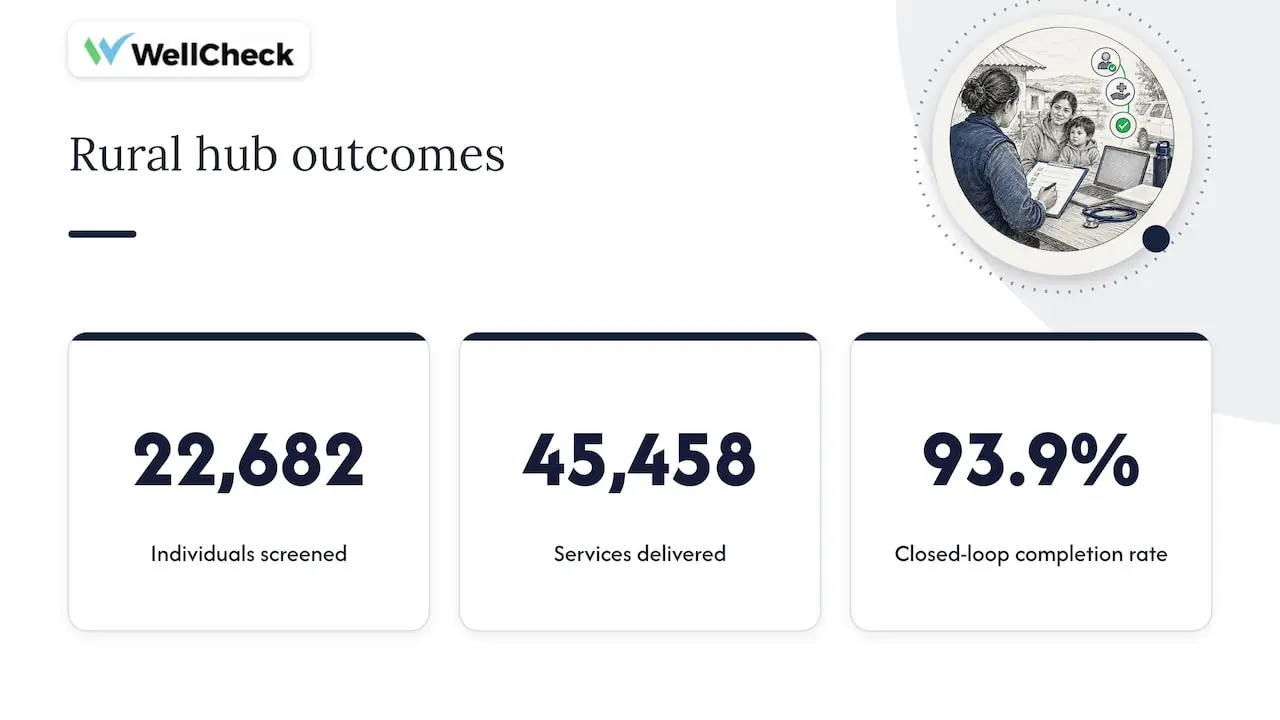
A rural health hub deployment with a multi-partner ecosystem, including both clinical and social services referrals, reported 22,682 individuals screened, 45,458 services delivered, and a 93.9% closed-loop completion rate. Rural health hub deployment with a multi-partner ecosystem. Includes both clinical and social services referrals. That level of completion did not come from a single tool. It came from the combination of shared status definitions, a documented follow-up window, and routine reconciliation between partners, the same elements covered in the implementation checklist above.
The common thread across these examples is unglamorous: agreed definitions, a realistic follow-up window, and someone checking the numbers on a regular cadence. The platform supports shared status vocabulary use, but partner consistency matters most.
Challenges and limitations specific to outcomes-based reporting in healthcare
The hardest problem in outcomes-based reporting is not technical, it is organizational: getting every partner to use the same status definitions. A clinical partner’s electronic health record may mark a referral “complete” the moment an appointment is scheduled, while a community-based organization might reserve that status for a service actually delivered. Without an agreed vocabulary, your closure rate reflects definitional drift as much as real performance.
Supply constraints create a second limitation that no amount of better tracking can fix. FHIR pilot findings show that housing referrals close more slowly than other categories largely because housing capacity is limited, not because follow-up is weak. Reporting that fact honestly, rather than treating a low housing closure rate as a program failure, is part of accurate outcomes reporting.
Partner capacity is a third constraint. Many community-based organizations lack an electronic health record or dedicated reporting staff, which limits how much data they can return on a regular schedule. The ONC SDOH Learning Forum summary notes that closed-loop solutions have to align with partner workflows and include a maintenance plan, rather than assume every partner can adopt the same system. A hub pattern, where a central platform or shared spreadsheet carries the reporting burden, is often the only realistic option for partners without their own infrastructure.
Finally, changing your follow-up window changes your numbers. Lengthening the window from two weeks to one to two months improved documented linkage in one evaluation, which means any comparison across reporting periods has to hold that window constant or explain why it changed.
Regulatory and compliance considerations related to outcomes-based reporting
Reporting requirements differ by funding source, and health centers reporting to HRSA face a distinct set of expectations. HRSA’s UDS and UDS+ guidance calls for structured, de-identified patient-level data for certain reporting pipelines, built around HL7 FHIR. Aligning your internal data structure to that format early avoids a costly rebuild when a funder formally requires it.
Consent is a separate, non-negotiable piece. Sharing referral status between a clinical partner and a community-based organization generally requires documented consent, and that consent record should be part of your minimum data set, not an afterthought layered on later. HRSA’s Health Center Controlled Networks guidance points toward automating status updates where feasible, both to reduce manual reconciliation and to produce cleaner, more defensible records for compliance review.
Data-sharing agreements function as the compliance backbone underneath all of this. Every partner exchanging referral status needs a written agreement specifying what data moves, how often, and under what safeguards. Without that paperwork in place, even a technically sound closed-loop system cannot produce reporting that would hold up to funder or regulatory review. Maintaining those agreements and the underlying records to a standard that survives outside scrutiny follows the same logic as other documentation retention standards: keep the record, date it, and note where it came from.
Tools and technologies commonly used to support outcomes-based reporting
Technology choices for outcomes reporting range from general-purpose research tools to purpose-built referral platforms. On the lightweight end, REDCap and similar data-capture tools support cohort monitoring and short-term outcome tracking, which works well for programs not ready to adopt a dedicated system.
Standards-based exchange is the technical backbone regardless of which tool sits on top. 360X and Gravity Project guidance defines the status message vocabulary that any tool should map to, and FHIR is the exchange format that UDS+ reporting is moving toward.
Purpose-built closed-loop referral platforms add dashboards, automated status tracking, and funder-ready report generation on top of that standards layer, which reduces the manual reconciliation work that a spreadsheet-based approach requires. Our own EquiLoop platform follows this pattern, which we cover in the next section.
Regardless of the tool, the technology itself is a facilitator rather than a fix. Closed-loop success depends on aligning whatever system you choose to partner workflows and on training staff and partners to use shared status definitions consistently. A platform without that groundwork produces clean dashboards built on inconsistent data.
Best practices for maintaining data privacy and security in outcomes-based reporting
Referral status data often includes sensitive details about housing instability, food insecurity, or behavioral health needs, which means privacy practices need to match the sensitivity of what you are tracking, not just general data security baseline.
Documented consent for each individual, specifying exactly what status information moves between which organizations, is the starting point. That consent record should travel with the referral data itself, not live in a separate system disconnected from the report.
De-identification matters when you prepare data for funders. UDS+ guidance calls for de-identified patient-level data in specified fields, which means your internal tracking should separate identifying information from the outcome data used in aggregate reporting.
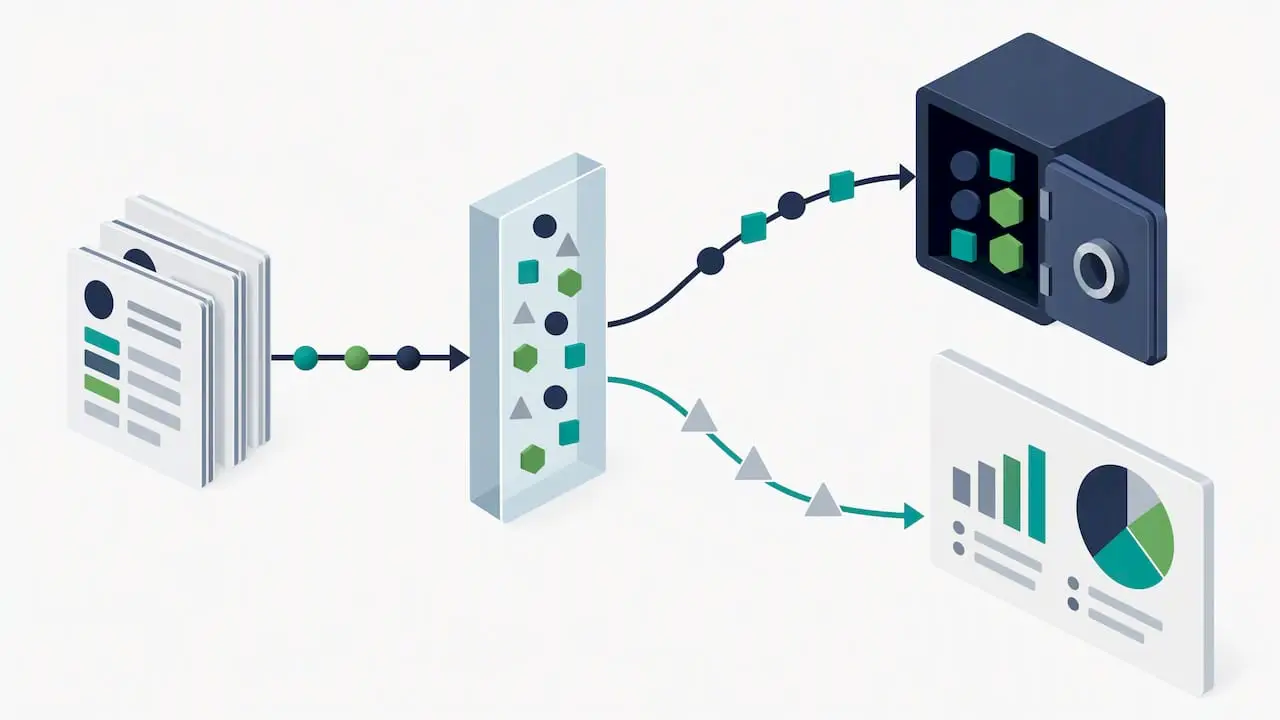
Data-sharing agreements should specify not just what gets shared but how it is protected in transit and storage, who has access on each partner’s side, and how long records are retained. Partners handling sensitive referral categories, particularly behavioral health, benefit from workflow guidance built around trauma-informed care practices that treat the data itself, not just the clinical interaction, with appropriate care.
Finally, limit access to identifiable referral data to staff who need it for follow-up, and keep your aggregate reporting layer separate from your operational tracking layer. That separation protects individuals while still letting you produce the disaggregated, funder-ready numbers your reports require.
How EquiLoop and Workforce Development Academy support outcomes-based reporting
We built EquiLoop around the exact gap this guide addresses: referrals get sent, and no one can later confirm what happened. EquiLoop tracks SDoH screening and intake, routes referrals to clinical and community partners, and follows status through to a confirmed outcome, then turns that into dashboards and funder-ready reports.
- Closed-loop tracking built around shared status definitions, not a separate label for every partner.
- Outcomes dashboards that disaggregate by category, site, or partner for funder reporting.
- Local configuration around the partner network and reporting requirements you already have, rather than a rebuild from scratch.
- Complements existing systems of record instead of replacing your EHR or case management tools.
We also provide a training platform for community health workers and navigators, helpful when onboarding new partners to a shared reporting workflow. If you want to see how this fits your own referral network, book a 30-minute demo and we will walk through it with you directly.
FAQ
What counts as a closed-loop referral in healthcare reporting?
A referral closes the loop when you have a confirmed outcome: services rendered, enrollment completed, or a documented decline with a reason. A status like “no-show” does not close the loop; it signals that follow-up is still required, as defined in 360X and Gravity Project guidance.
How long should a follow-up window be before marking a referral unresolved?
Follow-up windows commonly range from one to two months, and lengthening the window from two weeks to that range improved documented linkage to care in one project evaluation. Choose a window that matches your service categories and document it so your closure rate stays comparable across reporting periods.
What data-sharing agreements do I need for closed-loop reporting?
You need a written agreement with each referral partner specifying what status data gets shared, how often, and under what consent terms. HRSA’s UDS+ guidance points toward de-identified, structured patient-level data for certain reporting pipelines, which your agreements should support.
What platform can help us track closed-loop referrals without building one ourselves?
Our EquiLoop platform tracks SDoH screening, referral routing, status follow-up, and funder-ready reporting in one workflow, built to complement the systems you already use rather than replace them. Book a demo to see how it maps to your existing referral pathways.
Why does our housing referral closure rate look worse than other categories?
Housing referrals generally close more slowly because of supply constraints in available housing, not because follow-up is weaker. FHIR pilot data documents this pattern across service domains, so a lower housing closure rate is worth reporting with context rather than treating as a program shortfall.
Sources
- Community–Clinical Linkages and Referral Interventions: Systematic Review (2021)
- 360X and Social Determinants of Health (SDoH) Referrals (technical guidance)
