
Outputs are what your program produces: screenings completed, referrals sent, training sessions held. Outcomes are the changes those activities actually cause: a chronic condition managed, a housing referral resolved, an emergency department visit avoided. Track both, but build your reporting and funder narratives around outcomes, since that’s the evidence that determines whether your program keeps its funding. The steps below cover how to get there with logic models and closed-loop tracking.
TL;DR:
- Programs should focus on outcome measurement, such as referral resolution and reduced emergency visits, rather than just counting activities like screenings or referrals sent.
- Building a logic model helps connect outputs to achievable outcomes, but verifying those outcomes requires implementing closed-loop referral tracking systems.
- Outcome ownership must be separate from output logging, with clear follow-up routines and timelines, to ensure accountability and accurate reporting.
- A high volume of outputs can mask a lack of real change, so funders increasingly demand evidence that activities produce meaningful, verified results.
- Tools like EquiLoop and workforce training can automate outcome tracking and improve data reliability, supporting outcome-based reporting instead of simple activity counts.
Table of Contents
- What’s the Difference Between Outcomes and Outputs in Healthcare?
- Why Does the Outputs vs Outcomes Distinction Matter for Funders?
- How Do You Measure Outputs and Outcomes in a Community Health Program?
- How Do Logic Models Connect Outputs to Outcomes?
- Practical Checklist: Moving Your Reporting From Outputs to Outcomes
- How Closed-Loop Tracking Turns Outputs Into Outcome Evidence
- Ready to Report Outcomes Instead of Just Activity Counts?
- Sources
- FAQ
What’s the Difference Between Outcomes and Outputs in Healthcare?
An output is a countable activity your program controls directly. An outcome is the downstream change that activity is supposed to produce, and it’s rarely something you control alone. A glossary from the health inequalities research community puts it plainly: outputs are usually internal to your agency, while outcomes tend to be visible outside it and often require several outputs and multiple partners working together to happen at all.
In a community health setting, the pattern looks like this:
- Outputs: SDoH screenings administered, community health worker trainings delivered, referrals sent to a food pantry or housing agency.
- Outcomes: A screened patient’s referral gets accepted and completed, a household’s food insecurity score drops at the next screening, a patient avoids an emergency department visit because a transportation barrier got solved.
One rural health hub deployment illustrates the scale involved: 22,682 individuals screened, 45,458 services delivered, and a 93.9% closed-loop completion rate.[^1] The screening and service counts are outputs. The completion rate starts to tell you something about outcomes, because it measures whether referrals actually resolved rather than just went out the door.
[^1]: Rural health hub deployment with a multi-partner ecosystem. Includes both clinical and social services referrals.
Why Does the Outputs vs Outcomes Distinction Matter for Funders?
Funders read volume numbers with a healthy dose of skepticism now, because a high output count can hide a program that isn’t changing anything. A health department can report 3,000 screenings and still not know whether a single household got food assistance as a result. That gap is exactly what grant reviewers and payers are trained to probe.
A 2022 meta-analysis on accountability found that outcome-focused accountability improves performance most on complex tasks, while process, or output, accountability works better for simple, routine tasks. Care coordination across clinical and social service partners is a complex task by any definition. That’s the argument for weighting your reporting toward outcomes even though outputs are easier to count.
Three practical consequences follow from this:
- Reviewers increasingly ask “so what happened next,” not just “how many did you serve.”
- Output-only reports can make an underperforming program look successful, and a high-performing one look average.
- Outcome claims need a named owner and a way to verify the change over time, not just at intake.
Meta-analysis finding: Complex, multi-actor interventions benefit more from outcome accountability than from process accountability, which suggests referral and care coordination programs should weight reporting toward outcomes, not activity counts.
How Do You Measure Outputs and Outcomes in a Community Health Program?
Good measurement starts with separating the metric from the moment you can actually check it. Screening counts are available the day you screen someone. Behavior change, by definition, takes longer to show up, and your reporting cadence should reflect that.
- Immediate outputs (same day or same week): screenings completed, referrals sent, trainings delivered. Owned by frontline staff and navigators, pulled straight from intake or screening tools.
- Short-term outcomes (30 to 90 days): referral acceptance, referral resolution, first-visit completion. Owned by care coordinators or navigators doing follow-up calls, verified through closed-loop tracking rather than self-report.
- Intermediate outcomes (3 to 12 months): reduced ED utilization, improved chronic disease markers, stabilized housing. Owned by a data steward who can join referral data to clinical records or claims.
- Long-term outcomes (annual or multi-year): population-level health status change, sustained behavior change, policy or systems change. Usually owned jointly by program leadership and an evaluation partner.
Pro Tip: Don’t assign outcome ownership to the same person who owns the output. A navigator who logs the referral shouldn’t be the only one verifying it closed, because that creates a conflict between hitting a volume target and confirming an honest result.
Closed-loop verification, confirming a referral was accepted, delivered, and resolved, is what turns an output into evidence of an outcome. A practitioner-level discussion of closed-loop tracking makes the case directly: outputs are easier to measure and get reported as proxies for success, but real accountability requires that loop to close. Programs deciding which outcome metrics to track for SDoH and referrals usually start with two or three that map to funder priorities, not a dozen that map to everything.
How Do Logic Models Connect Outputs to Outcomes?
A logic model lays out the chain from inputs and activities to outputs and then to outcomes, using an “if, then” structure: if you deliver these activities, then you produce these outputs, and if those outputs happen at sufficient scale, then you should see these outcomes. The CDC’s logic model guidance breaks the outcome side into short, intermediate, and long-term categories specifically so programs stop treating “impact” as one vague bucket.
A simple version for a referral program might read:
- Activity: Screen patients for social needs during clinic visits.
- Output: Screening completed; referral sent to a housing or food partner.
- Short-term outcome: Referral accepted and service delivered within 90 days.
- Intermediate outcome: Household food insecurity score improves at the next screening.
- Long-term outcome: Fewer preventable ED visits tied to unmet social needs.
The NACCHO logic model quick guide recommends grounding each outcome claim in evidence about whether your chosen intervention, at your planned reach and intensity, can plausibly produce that result. If the evidence base for an activity is thin, set a more modest outcome target and say so in your logic model rather than overpromising.
Practical Checklist: Moving Your Reporting From Outputs to Outcomes
Most programs don’t need a new evaluation department to do this. They need a short list of decisions made once and applied consistently.
- Build or refine a logic model and pick two to four outcomes you can realistically measure, not twelve you can’t.
- Assign an owner to each outcome metric, separate from whoever logs the output, and give them a defined follow-up window.
- Stand up closed-loop referral verification so acceptance and resolution get confirmed, not assumed.
- Set a reporting cadence that matches each outcome’s timeline: monthly for short-term, quarterly for intermediate, annually for long-term.
- Build a funder-ready template that pairs each output number with the outcome it’s supposed to produce, so reviewers see the connection instead of a raw activity count.
Pro Tip: Run a data-quality check before every funder report by sampling ten closed referrals and confirming the outcome field matches what actually happened. A dashboard is only as honest as the data entered into it.
A written evaluation checklist built around these five steps tends to survive staff turnover better than an informal process that lives in one coordinator’s head. Reviews of community health outcome tracking, including one published assessment of outputs versus outcomes, point to the same root cause when programs fail at this: they never built the longitudinal infrastructure to capture what happened after the initial service.
How Closed-Loop Tracking Turns Outputs Into Outcome Evidence
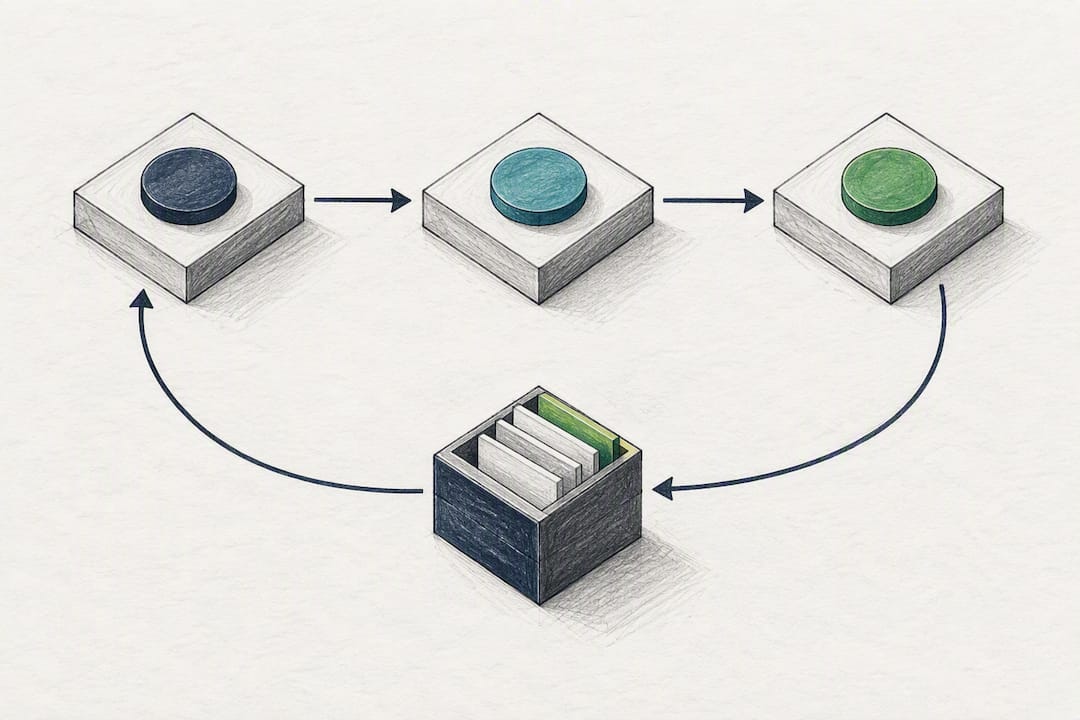
A closed-loop referral system carries a case through five stages: screening, routing to a partner, acceptance, service delivery, and verification. Each stage produces an output. Only the last one, verification, produces outcome evidence, because it confirms the referral actually resolved instead of just being sent.
That verification step is what most community programs are missing, and it’s exactly what generates the longitudinal data funders ask for.
- Screening and routing generate output counts: how many people, how many referrals.
- Acceptance and service delivery show partner-level follow-through.
- Verification closes the loop and produces the outcome signal: resolved, unresolved, or still pending.
The same rural health hub deployment referenced earlier shows what this looks like at scale: 22,682 individuals screened, 45,458 services delivered, and a 93.9% closed-loop completion rate.[^2] That completion rate exists only because someone tracked each referral past the point of sending it.
[^2]: Rural health hub deployment with a multi-partner ecosystem. Includes both clinical and social services referrals.
Ready to Report Outcomes Instead of Just Activity Counts?
If your program is still reporting screening and referral counts because there’s no system tracking what happens after the referral leaves your hands, that’s a workflow gap, not a staffing gap. EquiLoop handles SDoH screening, referral routing to clinical and community partners, follow-up tracking, and outcomes dashboards built for funder-ready reporting, so the closed-loop data you need for outcome claims gets captured automatically instead of chased down by phone calls.
For programs that also need consistent output quality from frontline staff and navigators, the Workforce Development Academy offers white-labeled training and credentialing so your workforce produces reliable, comparable data from the start. Both tools plug into the reporting problem this article has been walking through: outputs are easy to count, outcomes take infrastructure, and a closed-loop referral workflow is how you build it once instead of rebuilding it every grant cycle.
Book a 30-minute demo at Calendly to walk through how it would work for your program’s specific referral network and funder requirements.
Sources
- Developing an Effective Logic Model (NACCHO)
- The Effect of Outcome vs. Process Accountability-Focus on Performance: A Meta-Analysis (2022)
- CDC logic model guidance and examples
- Practitioner discussion on closed-loop tracking and outcomes (PMC)
FAQ
What Is the Difference Between Outcomes and Outputs in Healthcare?
Outputs are the countable activities a program produces, like screenings or referrals sent. Outcomes are the changes those activities cause, such as improved health status or a resolved social need, and they usually require closed-loop verification to confirm.
Why Do Funders Care More About Outcomes Than Outputs?
Output counts show activity but not whether that activity changed anything. A 2022 meta-analysis found outcome accountability produces better results on complex, multi-partner tasks like care coordination, which is why funders increasingly ask for outcome evidence over activity totals.
How Do You Turn Outputs Into Measurable Outcomes?
Build a logic model that links each output to a short, intermediate, and long-term outcome, then verify results through closed-loop tracking rather than assumption. Platforms like EquiLoop automate the referral tracking and dashboard reporting that this verification requires.
What Is a Good Example of an Outcome Metric in Community Health?
Referral resolution within 90 days is a common short-term outcome metric, while reduced emergency department visits tied to a specific social need is a typical intermediate outcome. Both require tracking beyond the initial referral, which the NACCHO logic model guide recommends documenting explicitly.
How Much Does EquiLoop Cost?
EquiLoop’s pricing isn’t published. Current pricing details are available by scheduling a 30-minute demo or checking the EquiLoop page directly.

