
Yes, SMS can support closed-loop referral follow-up, but only as one channel inside a workflow built around direct or assisted referrals, documented status codes, and HIPAA-aware data exchange. SMS works best for status checks and outreach, not as the system of record. This guide covers the components, a step-by-step checklist, compliance basics tied to HHS guidance, and how follow-up data maps to CMS reporting windows.
TL;DR:
- SMS is useful for status checks and outreach but should not replace a formal system of record or documentation standards.
- A standardized data structure with unique IDs and limited status codes is essential for effective tracking across multiple organizations.
- HIPAA requires careful message content management, advocating for minimal PHI in SMS and secure links for detailed information, supported by proper vendor agreements.
- Successful workflow implementation depends on cross-organizational coordination, consensus on data fields, and building in response escalation steps for non-responders.
- Using a platform like EquiLoop can streamline referral follow-up processes and ensure compliance, especially in rural and community health settings.
Table of Contents
- Why closed-loop referral follow-up matters for rural and community programs
- Core components of an SMS-enabled closed-loop referral follow-up workflow
- Step-by-step implementation checklist for SMS-enabled follow-up
- HIPAA basics and practical mitigations for SMS and cross-organizational data sharing
- Measuring outcomes and producing funder-ready reports
- Operational tips and common pitfalls from rural implementations
- How EquiLoop and the Workforce Development Academy support this workflow
- FAQ
- Sources
Why closed-loop referral follow-up matters for rural and community programs
Most community health programs can report how many referrals they sent. Far fewer can report what happened after that. A systematic review of screening and referral programs found that direct referral assistance and warm handoffs tend to improve referral uptake, patient-reported resolution of social needs, and patient experience compared with passive, indirect referrals. In some studies cited in that review, connection rates jumped substantially once programs moved from a printed list of services to a staff member actively confirming contact.
That gap between volume and follow-through creates a reporting problem. Funders and payers increasingly want evidence that a referral led somewhere, not just a count of referrals made. Without a standardized way to track status, programs are left guessing at outcomes they are expected to document.
SMS fits into this picture as a lightweight way for a community health worker or navigator to check status quickly and log the result. It does not replace the navigator’s role; it extends it.
- Direct and assisted referrals outperform passive handoffs on uptake and patient experience.
- Programs without status tracking cannot answer basic funder questions about follow-through.
- SMS is a channel for outreach and confirmation, not a substitute for navigator accountability.
Core components of an SMS-enabled closed-loop referral follow-up workflow
A reliable workflow starts with a shared data structure, not a messaging tool. Every referral record needs a consistent set of fields so status can be aggregated across partners and reported later.
- A unique referral ID, screening result code, and referral destination.
- Referral date, contact attempt dates, and a standardized status code.
- Outcome date and outcome code once the referral closes.
Status codes should be limited to a small, shared set: pending, accepted, in progress, connected, declined, and unable to locate. Open-text status fields are nearly impossible to aggregate across multiple community-based organizations, which matters when a program reports to a funder or payer across dozens of partners.
Referral approach matters as much as the status field. Indirect referrals, where a patient receives a phone number and is left to make contact, consistently underperform direct referrals and warm handoffs, where a staff member confirms the connection happened. Integration method is the next decision: a CSV upload, an API or FHIR connection, a direct EHR link, or a health information exchange feed. A platform designed to complement existing systems of record rather than replace them tends to reduce friction for CBOs that already have their own intake tools.
In practice, SMS shows up as short, templated status checks sent to a CHW or CBO contact (“Has Patient #4821 connected with housing services yet?”), sometimes with a secure link back to a status-update form rather than details in the message body itself. Every reply gets logged against the referral record, not left in a phone’s message thread.
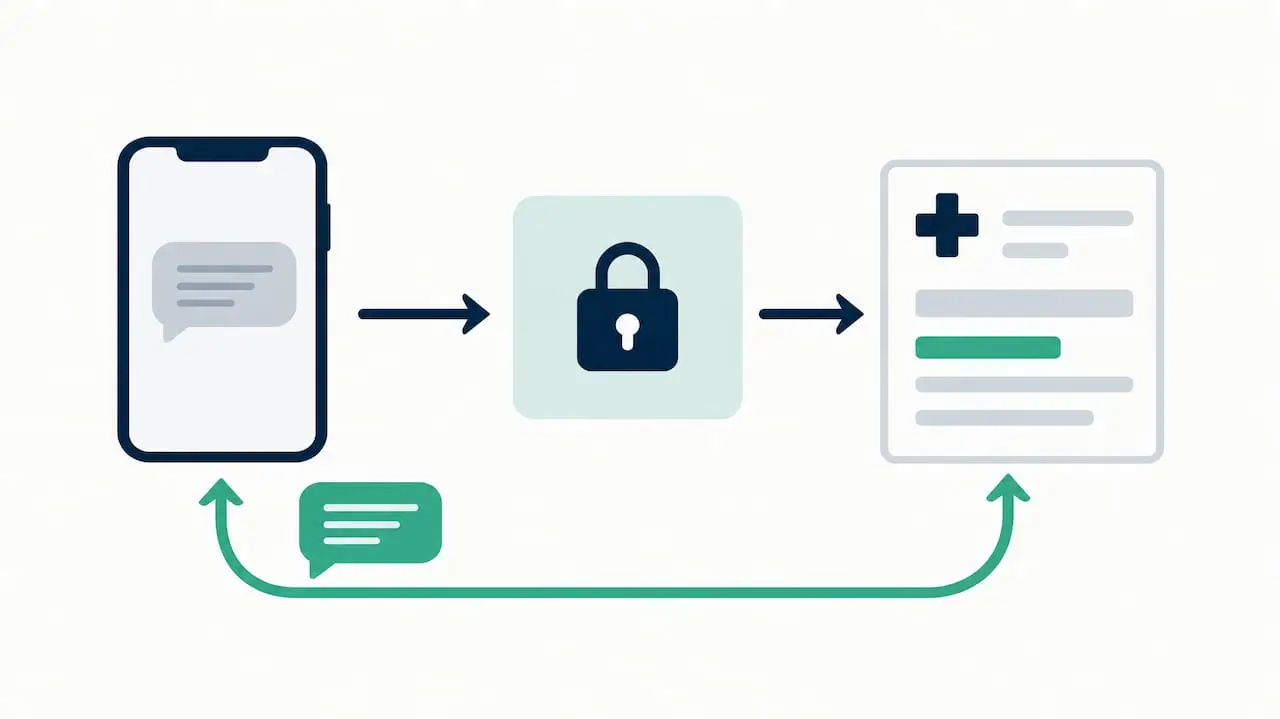
Pro Tip: Keep SMS templates short and generic. A status check should never need to name a diagnosis or condition to be useful.
Step-by-step implementation checklist for SMS-enabled follow-up
Standing up this workflow is a governance exercise before it is a technology purchase.
- Form a small working group: a clinical lead, a CHW or navigator lead, one or two CBO representatives, an IT contact, a privacy or compliance reviewer, and a funder liaison.
- Agree on the minimal data fields and status codes, tying at least one status milestone to a funder-required window, such as a 60-day contact check.
- Choose an integration method and an SMS approach: record-only templates that ask for a status update, or secure-link workflows that route staff to a form.
- Build consent into intake. Collect opt-in for SMS contact per your organization’s existing consent policy, and keep message bodies free of protected health information where possible.
- Run a pilot with two or three CBO partners over 60 to 90 days, tracking contact attempts and closure rates before expanding.
- Pilot partners should be chosen for responsiveness, not convenience.
- Templates and cadence should be revised after the first few weeks of real data.
- A single reconciliation meeting each week keeps status codes consistent across partners.
Our implementation guide walks through this checklist in more detail for programs planning a full rollout.
HIPAA basics and practical mitigations for SMS and cross-organizational data sharing
HIPAA permits covered entities to share protected health information for care coordination and case management without individual authorization, as long as disclosures meet the minimum necessary standard under 45 CFR 164.506. That standard, not a blanket restriction, is what should guide what goes into an SMS message.
Plaintext SMS carries real risk if it contains diagnosis codes, service type, or other identifiable health details. Practical mitigations include:
- Keep message bodies limited to a referral ID or patient identifier, never a diagnosis or condition.
- Use secure links for any status update that requires more than a yes-or-no reply.
- Obtain a business associate agreement with any SMS vendor that processes PHI on your behalf.
- Keep an audit trail of contact attempts, dates, and outcomes for funder review and internal quality control.
93.9% closed-loop completion rate has been recorded in one rural health hub deployment with a multi-partner ecosystem that included both clinical and social services referrals, showing that disciplined status tracking across partners can produce reportable, near-complete follow-up data.
Whether a CBO partner counts as a business associate depends on whether it creates, receives, maintains, or transmits PHI on your behalf. Map that relationship early, since it determines whether a BAA is required before any data, including SMS-based status updates, moves between organizations.
Measuring outcomes and producing funder-ready reports
Converting status data into a funder-ready report starts with the same minimal dataset used for tracking: a denominator population defined by a screening flag, a referral date, documented evidence of contact with a community service provider, and an outcome code and date.
CMS measure specifications give two concrete anchors. MIPS Measure 498 requires documented contact with a community service provider within 60 days of screening, and Measure 374 addresses closing the referral loop through receipt of a specialist or consultant report. Both give programs a time window and an evidence standard to build reporting around, rather than an arbitrary internal deadline.
- Calculate performance rate as confirmed closures divided by the eligible denominator for the reporting period.
- The most common source of lost numerator evidence is a contact that happened but was never logged.
- CBO acknowledgment, patient-reported contact, or CHW documentation can all count as acceptable evidence depending on the measure’s own rules.
Our metrics playbook breaks down how to track these fields without adding reporting burden to clinical staff.
Operational tips and common pitfalls from rural implementations
CHWs and navigators remain the backbone of follow-up accuracy. Programs that route status verification through a trained CHW see more complete and more trustworthy documentation than programs that rely on automated messages alone.
Reducing burden on CBO partners matters just as much as the technology choice. One-click acknowledgment options, shared spreadsheets, or a lightweight web form tend to get used; a second proprietary login usually does not. Follow-up cadence should allow enough time for a real connection to occur. Checking status too early tends to produce false negatives and premature closures rather than accurate data.
Pro Tip: Build follow-up timing around weeks, not days. Research on program implementation shows that follow-ups conducted too early routinely undercount real connections.
Staff training is often the missing piece. Role-specific modules for CHWs and navigators, such as those offered through our Workforce Development Academy, help standardize how status checks and documentation get handled across a partner network.
How EquiLoop and the Workforce Development Academy support this workflow
We built EquiLoop around the exact problem this guide describes: referrals get sent, and no one can say what happened next. EquiLoop manages SDoH screening and intake, referral routing to clinical and community partners, follow-up and status tracking, and funder-ready outcomes dashboards, all configured around the partner network and reporting requirements a program already has.
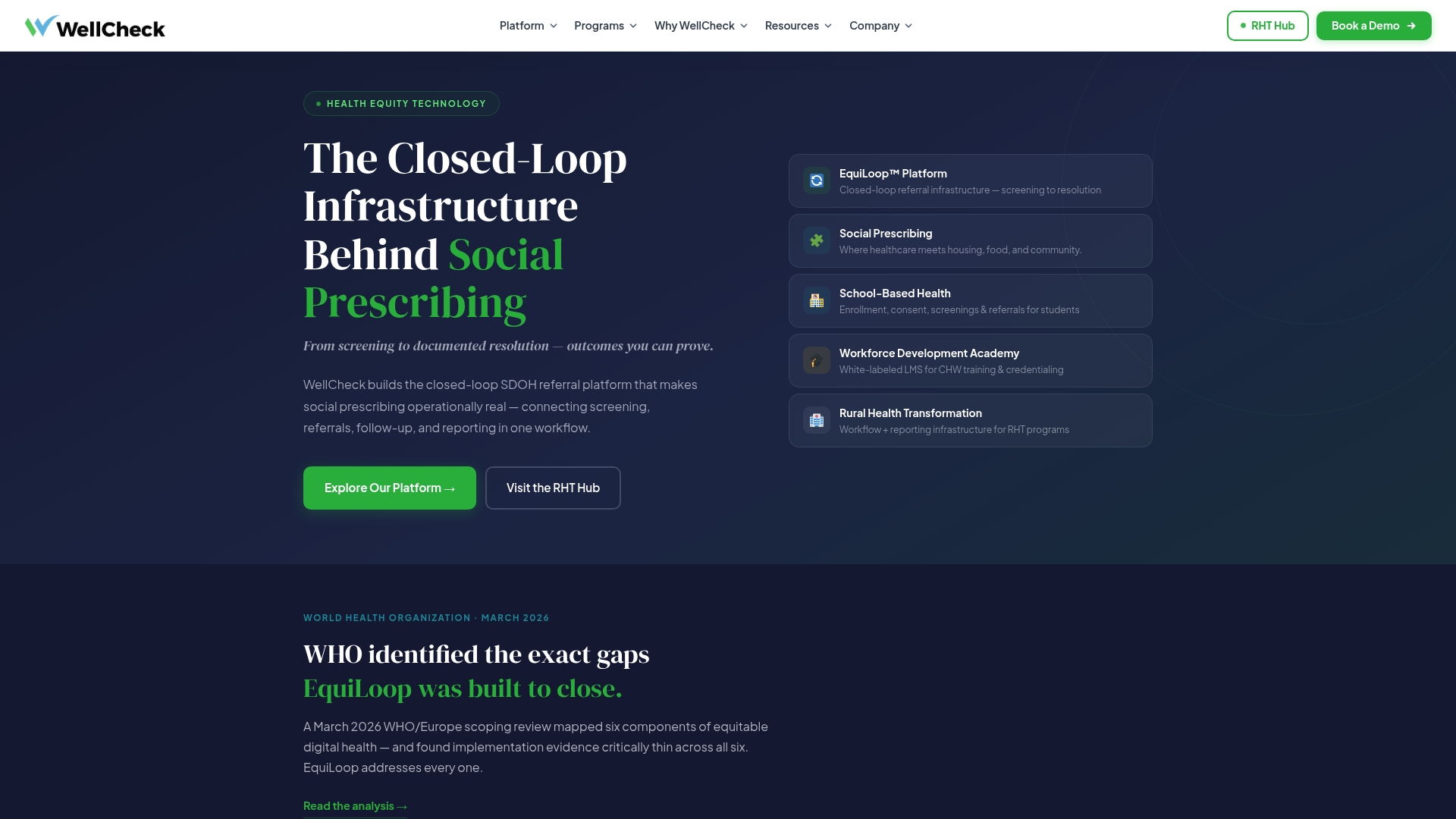
- The platform is built to complement existing systems of record rather than replace them.
- We serve community health organizations, public health departments, and rural health networks across the United States.
- We offer workforce training paired with the platform for CHWs and navigators who do the day-to-day follow-up work.
If your team is weighing how to stand up SMS-enabled status checks without building a reporting system from scratch, a 30-minute demo is the fastest way to see how the workflow maps to your current referral pathways.
FAQ
Is SMS allowed for healthcare referral follow-up under HIPAA?
Yes, as long as message content follows the minimum necessary standard, meaning no diagnosis or unnecessary health detail appears in the message body. HHS guidance permits this kind of disclosure for care coordination without separate patient authorization.
What is the difference between appointment reminder texts and closed-loop follow-up?
Closed-loop referral follow-up tracks whether a referral to a clinical or community service was ever accepted, delivered, and resolved, using status codes and documented outcomes. It is a distinct workflow from reminder texts, which only prompt a patient about an upcoming appointment.
How does SMS follow-up connect to CMS MIPS reporting?
Status checks and documented contact attempts feed directly into measures like MIPS Measure 498, which requires evidence of contact with a community service provider within 60 days of screening. Consistent status codes make that evidence easier to pull at reporting time.
Do community health workers need special training to manage SMS-based follow-up?
Programs see more accurate documentation when CHWs and navigators receive role-specific training on status verification and consistent coding practices. Our Workforce Development Academy offers training built for that role.
What happens when a patient does not respond to a follow-up text?
A non-response should trigger a defined escalation step, such as a phone call or a CHW home visit, rather than an immediate closure of the referral as “unable to locate.” Checking too early tends to produce false negatives, so programs benefit from building in a longer window before marking a referral unresolved.
Sources
- Screening and Referral Care Delivery Services and Unmet Health-Related Social Needs: A Systematic Review — Preventing Chronic Disease (CDC)
- Uses and disclosures for care coordination and continuity of care — HHS/HIPAA FAQ
- MIPS measure 498: Connection to Community Service Provider — CMS measure specification (2024)
