One front door to the programs
your community already has.
Tribal health departments run programs that share the same patients but not the same intake path. EquiLoop gives community members a single public entry point, and gives your staff one place to see where every request went and whether it closed.
Schedule a 30-minute conversation →Most people do not know what your programs offer, or which one to call.
Behavioral health, diabetes prevention, elder services, transportation, food, housing assistance, community health representatives. Each has its own phone number, its own intake, and its own paper. A community member with three needs makes three calls and repeats the same story three times. EquiLoop puts one door in front of all of it.
Public service directory
Every program your Nation offers, listed in one place, with current eligibility and contact information that program staff maintain themselves.
Self-referral
A community member can request services directly, without needing to know which department handles what or waiting for a clinic visit to raise it.
Pre-screening
Eligibility and need questions are answered up front, so the request reaches the right program already qualified rather than bouncing between departments.
Document upload
Enrollment verification, income documentation, and referral paperwork are attached at the point of request instead of chased down later by phone.
Routing
The request goes to the program that owns it, with an assigned owner and a due date, and it stays visible until someone records what happened.
A referral that leaves the building should not leave your view.
Once a request is routed, EquiLoop holds it open until a status is recorded. Not sent and forgotten. Accepted, delivered, declined, or resolved, with a name and a date attached to each change.
- Every referral carries an owner, a status, and a timestamp for each change.
- Community health representatives work from a task list rather than a call-back pile.
- Program directors see open, aging, and closed volume without waiting for a report.
- Reporting for funders is generated from the workflow rather than assembled from it afterward.
PRC is where an untracked referral becomes a denied claim.
PRC referrals carry eligibility requirements, authorization steps, and documentation the outside provider has to return before anything gets paid. When that trail lives in a folder, a fax log, and someone's memory, gaps surface at reconciliation rather than at the point of care.
EquiLoop holds the referral record and the documentation trail alongside your PRC workflow, so the authorization, the referral, and the returned documentation stay attached to the same person and the same request.
Every referral, tracked to a documented outcome.
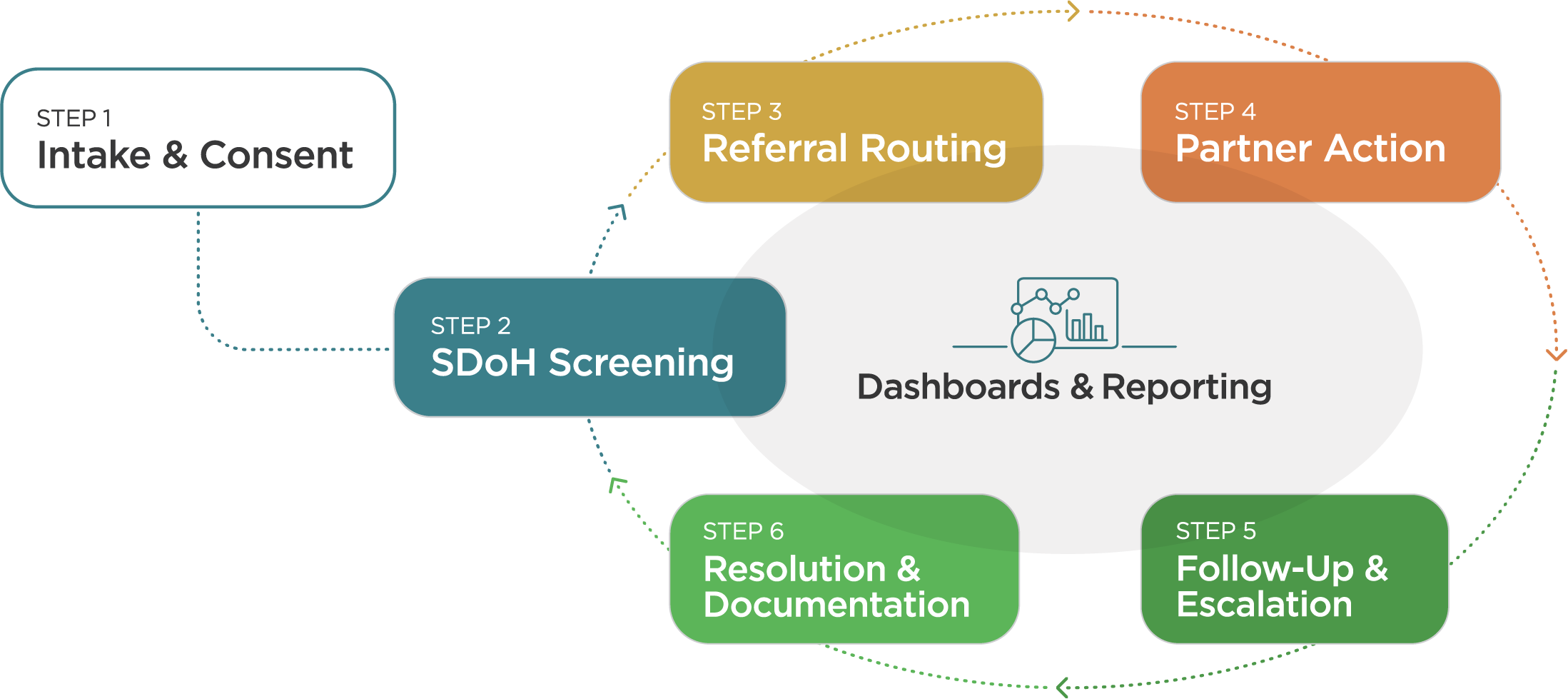
EquiLoop™ at scale
The same families move through several of your programs at once.
Coordination breaks down where programs share clients but not a shared intake path. That is the gap EquiLoop is built to close, and it is the same gap whether the funding comes from IHS, a state agency, or a private foundation.
One record of the person
Duplicate entries across programs are flagged rather than accumulated, so a household is not counted five different ways in five different reports.
One view for the director
Volume, status, and outcomes across every program on the platform, stratified by community, service type, and referral source rather than reported only as totals.
One reporting trail
Each funder asks for a different cut of the same activity. The activity is documented once, and the cuts come out of it.
This is not a replacement for the system your clinic runs on.
EquiLoop sits above the record system rather than inside it. It works with RPMS today and with whatever replaces it. The community programs it covers were never in the clinical record to begin with.
PATH is the IHS-wide RPMS replacement program, and it will move on its own timeline. Nothing on this page depends on where your facility sits in that transition, because the programs EquiLoop coordinates are the ones the clinical record was never built to hold.
Start with your front door
Thirty minutes, walked through with your programs on the screen rather than a generic demo. We will show you what the public directory and self-referral path would look like for your Nation, and what it takes to stand it up.
Schedule a conversation →
